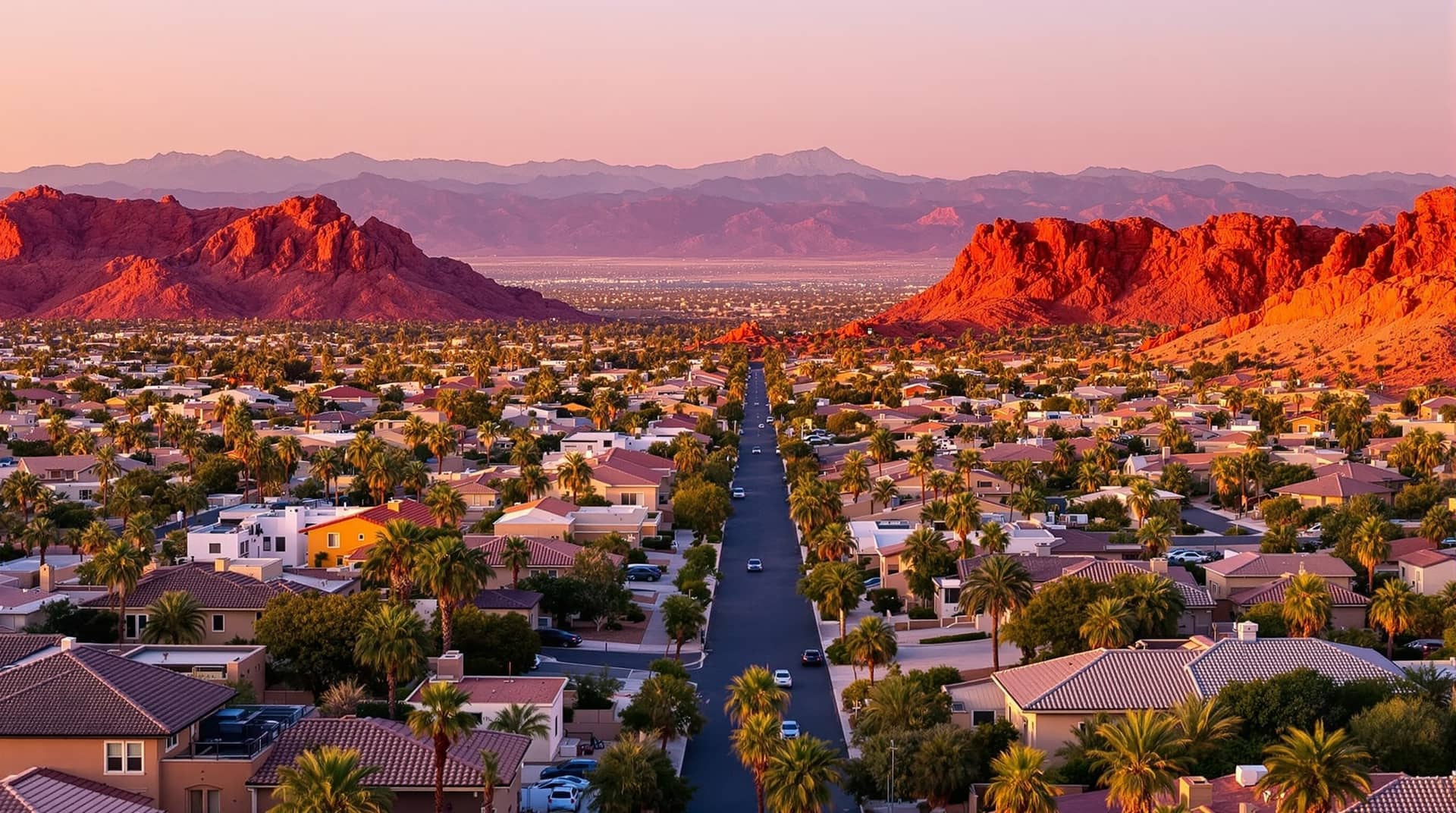
Las Vegas has undergone a fundamental transformation. For decades, the city's identity was tied to the 4.2-mile stretch of Las Vegas Boulevard, but in 2026, the real economic growth is happening in home offices across Summerlin, Henderson, and the Northwest. Las Vegas has emerged as a premier destination for the digital nomad and the corporate remote employee alike. The pitch is simple: keep your high-tier coastal salary, pay zero state income tax, and enjoy a cost of living that, while higher than it used to be, still dwarfs the prices in San Francisco or Seattle.
When you combine fast internet infrastructure with 300 days of sunshine and an international airport that can get you to a meeting in Silicon Valley in 90 minutes, the appeal is obvious. However, the "remote work Las Vegas" lifestyle isn't just about poolside Zoom calls and cheap houses. It requires a specific understanding of Nevada's tax nuances, the reality of desert utility bills, and the shift in social dynamics when your "office" is miles away from the neon lights.
The Tax Math for Remote Workers
The most immediate "raise" a remote worker receives upon moving to Las Vegas is the elimination of state income tax. For those moving from California to Las Vegas, this is often the primary driver. In Nevada, what you see on your federal tax return is what you get. There is no state-level "haircut" on your paycheck.
Let's look at the real-world dollar savings in 2026. If you are a single filer earning a $100,000 salary in California, you are likely losing about $6,000 to $7,000 to the state. In Las Vegas, that $6,000 stays in your pocket. At the $150,000 income level, the savings jump to approximately $12,000 annually. For high earners clearing $200,000, the "Nevada Dividend" can exceed $18,000 a year. That isn't just "extra money"; that is a mortgage payment, a robust retirement contribution, or a luxury car lease paid for entirely by a change in zip code. You can find a more granular breakdown of these brackets in our Nevada income tax vs California guide, but the takeaway is clear: the higher your remote salary, the more Nevada rewards you for living here.
Cost of Living vs Remote Salary
A $120,000 remote salary is a respectable middle-class wage in many cities, but in Las Vegas, it still carries significant weight. While the "cheap Vegas" of 2015 is a memory, the value proposition remains strong when compared to other tech hubs.
In San Francisco, a $120,000 salary often leaves a professional "rent burdened," spending 40% or more of their gross income on a modest one-bedroom apartment. In Austin, Texas, Vegas's primary competitor for remote workers, housing prices and property taxes have surged, narrowing the gap. In Las Vegas, that same $120,000 allows for a modern 3-bedroom home in a gated community, a significantly higher standard of living, and the ability to actually save money.
The cost of living in Las Vegas is influenced heavily by the fact that we have no state income tax and relatively low property taxes compared to the national average. This means your "disposable" income (the money left after the basics are covered) is much higher. This is the secret sauce of the Vegas remote work scene: you aren't just surviving; you are thriving on a salary that would be "just okay" elsewhere.
Internet & Infrastructure
You cannot work remotely without a stable connection, and Las Vegas generally delivers. The valley is dominated by two major players: Cox Communications and CenturyLink (Quantum Fiber). Cox is the most widely available, offering gigabit speeds that are reliable enough for heavy video conferencing and large file transfers. CenturyLink's Quantum Fiber is the preferred choice for power users, offering symmetrical upload and download speeds, though its availability is still concentrated in newer developments in Summerlin West, Inspirada, and Skye Canyon.
For those in areas where wired infrastructure lags, T-Mobile Home Internet and Verizon 5G Home have become viable, cost-effective backups. Furthermore, the city's coffee shop culture has evolved. Gone are the days when your only options were loud casino Starbucks. Neighborhoods now boast local spots like Mothership Coffee or Vesta, which are designed with the remote worker in mind: plenty of outlets, fast guest Wi-Fi, and a professional-adjacent atmosphere.
Coworking Spaces in Las Vegas
Even the most dedicated home-body occasionally needs to escape the four walls of their spare bedroom. The coworking scene in Las Vegas has matured rapidly to meet this demand. You aren't limited to the Strip; in fact, the best spaces are purposefully located in the residential belts.
Work In Progress (Downtown & Henderson): This is the "original" Vegas coworking hub. It offers a creative, high-energy environment. A hot desk typically runs about $150-$200 a month, while a dedicated desk is closer to $350.
The Innevation Center: Located near the 215 and Decatur, this space was gifted to the community by Switch. It is more of a "tech-heavy" environment, great for networking with local founders and engineers.
Regus & WeWork: For those who need a more corporate, polished vibe with global access, these traditional players have locations in Summerlin (specifically at Two Summerlin and Expo) and Town Square.
Expect to pay $150/month for basic "drop-in" access and up to $400/month for a dedicated desk with 24/7 access. For many remote workers, this is a necessary "sanity expense" that provides a social outlet and a clear boundary between work and home.
The Summer Work-From-Home Reality
We have to be honest about the "caveat" of remote work in Las Vegas: the summer. From June through September, the desert is a furnace. For the remote worker, this means your home office is your bunker.
The most immediate impact is on your utility bill. During the peak of July and August, keeping a 2,000-square-foot home at a comfortable 74 degrees while running computers and monitors all day will result in electric bills between $300 and $500 a month. This is a "seasonal tax" that you must budget for. Our Las Vegas summer electric bill guide covers exactly what to expect and how to manage it.
However, there is a productivity upside. Because it is 110 degrees outside, you have zero "FOMO" (fear of missing out). You aren't tempted to go for a midday hike or sit on a patio. You stay inside, the AC hums in the background, and you get an incredible amount of work done. Most Vegas remote workers find that their highest output happens in the summer, leaving the beautiful spring and fall months for a more relaxed schedule.
Where Remote Workers Live
In Las Vegas, "location, location, location" for a remote worker means proximity to amenities, not an office. Summerlin and Henderson are the two undisputed champions.
Summerlin offers the "urban-suburban" mix, where you can work from a home office in the morning and be on a hiking trail in Red Rock Canyon by 4:00 PM. It also has the highest concentration of high-end coffee shops and retail. Henderson, specifically the areas of Green Valley and Seven Hills, offers a similar upscale vibe with perhaps a bit more "quiet" and highly rated parks.
Families working remotely often settle in these areas because they provide the best balance of safety, school quality, and infrastructure. If you are trying to narrow down your search, our guide on the best neighborhoods for families in Las Vegas covers the specifics of the master-planned communities that cater to the work-from-home crowd.
State Tax Rules for Remote Workers
This is the section where you need to pay attention, especially if you are moving from California to Las Vegas but keeping your CA-based job.
Generally, you pay income tax in the state where the work is performed. If you are sitting in a home office in Henderson, the work is being performed in Nevada (zero tax). However, California is notoriously aggressive. If you travel back to the CA office for a week of meetings, you owe California tax for that week. Furthermore, if your employer doesn't properly "localize" your payroll to Nevada, they might continue to withhold CA taxes by default.
It is vital to ensure your HR department recognizes your Nevada residency. You want to avoid a "nexus" situation where California claims you are still a resident. Keep your Nevada driver's license, register your cars here, and ensure your "domicile" is clearly established. Nevada is a tax haven, but only if you follow the rules to exit your previous state's tax net. See our Nevada income tax vs California comparison for the full picture on safe harbor rules.
Freelancers and Self-Employed Remote Workers
Many remote workers in Las Vegas run a side income stream alongside their primary job, taking advantage of the flexible schedule that remote work allows. The guide to side hustles in Las Vegas covers what actually works here, from gig driving during convention season to renting spare rooms during major events.
For the 1099 freelancer or the remote business owner, Las Vegas is a paradise. Beyond the lack of personal income tax, the state's business climate is incredibly friendly. Forming a Nevada LLC is a standard move for remote contractors; it provides a layer of liability protection and, more importantly, allows you to take advantage of Nevada's business-friendly regulations.
The cost to maintain a business here is lower than in almost any other major state. There is no corporate income tax in Nevada (though there is a Commerce Tax if your gross revenue exceeds $4 million, a "problem" most of us would love to have). If you are moving here to strike out on your own, our guide on starting a business in Las Vegas walks you through the steps of setting up your entity and getting your local business licenses.
FAQ
Q: Is Las Vegas good for remote work?
A: Yes, it is one of the best in the US. The combination of no state income tax, high-speed fiber internet, and a significantly lower cost of living compared to coastal cities makes it a top-tier choice for remote professionals.
Q: Do I pay California taxes if I work remotely from Nevada?
A: Generally, no, as long as you are physically performing the work in Nevada. However, if you visit California for work purposes, you may owe tax for those specific days. You must ensure your employer updates your work location to Nevada to stop CA withholdings.
Q: What is the best neighborhood in Las Vegas for remote workers?
A: Summerlin is often cited as the best due to its "work-life" balance and proximity to Red Rock. Henderson (Green Valley/Seven Hills) is a close second for those who prefer a slightly more established, quieter suburban feel.
Q: How much does it cost to work from home in Las Vegas in summer?
A: Expect your electricity bill to spike. For a standard 2,000 sq. ft. home, summer cooling costs can range from $300 to $500 per month. This is offset by the fact that heating costs in the winter are virtually non-existent.
Find Tech Jobs in Las Vegas
Looking for open positions? Browse our Las Vegas Job Board for thousands of local listings updated daily. View Tech jobs →
Keep reading
- Best Companies to Work For in Las Vegas (2026)Top employers in Las Vegas ranked across gaming, healthcare, tech, and logistics. Honest assessments of pay, culture, and career growth for job seekers in 2026.
- Hospitality Careers in Las Vegas: The Full Picture (2026)Las Vegas hospitality careers go beyond dealers and servers. Career paths, salary tiers, union benefits, and how to break in with no experience.
- Las Vegas Salary Guide 2026: Pay Ranges Across Every Major IndustryAverage salaries in Las Vegas by industry: gaming, healthcare, tech, and more. Includes Nevada no-income-tax math and what a good offer actually looks like.
- Bartending in Las Vegas: Real Pay and How to StartWhat Las Vegas bartenders actually earn at Strip clubs, casino bars, and locals spots. How to get hired, what training you need, and the honest math.