Updated July 2026
Quick Answer: Moving from the Midwest to Las Vegas delivers real financial benefits: no state income tax, lower housing costs than Chicago, and significantly lower utility costs outside of summer. The hardest adjustments are not financial. They are environmental and social: no seasons, no green landscape, a more transient community culture, and summer heat that reorganizes your entire daily schedule from June through September.
Moving from the Midwest to Las Vegas: What the Relocation Guides Skip
People from the Midwest move to Las Vegas every year for obvious reasons: sunshine, affordable housing compared to Chicago, no state income tax, and the ability to go outside in January without risking frostbite. Those benefits are real.
What the relocation guides tend to gloss over is the culture shock. Not the neon lights and casino culture, which most people have already mentally prepared for. The actual shock is subtler and takes longer to fully surface: the absence of seasons, the difficulty of building tight community in a city with high turnover, the strange psychological weight of a landscape with no green, and a summer that does not merely inconvenience you but actively reshapes how you live your life for four months.
This guide covers both sides, honestly.
The Financial Case: What You Actually Gain
No State Income Tax
Nevada has no state income tax. Illinois has a flat 4.95% state income tax. Ohio uses a graduated structure, with rates reaching 3.99% on income above $26,050. Michigan charges 4.25%. Wisconsin tops out around 7.65% for higher earners. Minnesota reaches 9.85% at the top bracket.
The savings are real and immediate. A household earning $100,000 per year in Illinois is paying roughly $4,950 in state income tax. In Nevada, that bill is zero. Over 10 years, at constant income, that is $49,500 returned to your household, not counting raises or compounding.
For higher earners coming from Wisconsin or Minnesota, where state rates climb steeply, the gap is even larger. A Minnesota household at $200,000 taxable income pays roughly $17,000 in state income tax. In Nevada: nothing.
This is the single largest financial driver of the Midwest-to-Vegas move for working-age households.
Housing Costs vs. Chicago
Chicago proper and its desirable suburbs (Naperville, Evanston, Wilmette, Oak Park) carry housing costs that rival major coastal markets for what the Midwest delivers in terms of property.
A decent single-family home in Naperville or Elmhurst runs $450,000 to $700,000 in 2026. North Shore suburbs like Wilmette or Winnetka start at $600,000 and go well above $1 million for anything with good schools and condition.
Las Vegas median home prices in 2026 sit around $485,000. In Henderson or northwest Las Vegas (Centennial Hills), you can find newer construction with 3 to 4 bedrooms, a 2-car garage, and HOA community amenities in the $425,000 to $575,000 range. That is comparable or better to what $500,000 to $700,000 buys in Chicago's western suburbs, and it comes without Illinois's high property taxes.
Illinois property taxes are brutal. Effective rates in Cook County run 1.8% to 2.3%. DuPage County (Naperville) runs around 1.7% to 2.0%. A $550,000 home in Naperville carries a property tax bill of roughly $9,350 to $11,000 per year.
The same home in Henderson Nevada, at Nevada's effective rate of approximately 0.60%, costs roughly $3,300 per year in property taxes. The annual savings: $6,000 to $7,700. Over 10 years: $60,000 to $77,000.
Ohio, Michigan, and Wisconsin have lower property taxes than Illinois but still substantially higher than Nevada in most cases. Ohio's effective rate ranges from 1.1% to 1.8% by county. The Nevada advantage is consistent, though less dramatic than the Illinois comparison.
Cost of Living: Category by Category
| Category | Chicago Metro (2026) | Columbus / Cleveland (2026) | Las Vegas (2026) | |---|---|---|---| | Median home price | $380,000-$650,000 | $240,000-$310,000 | ~$485,000 | | Median 2BR apartment | $2,100-$2,800 | $1,200-$1,600 | $1,750-$2,100 | | State income tax | 4.95% flat (IL) | Up to 3.99% (OH) | None | | Property tax rate | 1.8%-2.3% (Cook Co.) | 1.1%-1.8% (varies) | ~0.60% | | Winter utility bills | $180-$320/month | $150-$280/month | $80-$150/month | | Summer utility bills | $120-$200/month | $120-$180/month | $300-$500/month | | Gas (regular, July 2026) | ~$3.50 | ~$3.20 | ~$3.70 |
The utility swing is important to understand. Midwesterners have high winter utility bills: heating costs in Chicago, Columbus, or Cleveland run the gas bill up significantly from November through March. In Las Vegas, winter utility bills are modest; you may run heat occasionally but nothing approaching a Chicago January gas bill. The trade-off is that Las Vegas summer electric bills are substantial: $300 to $500 per month from June through September for an average home.
The annual utility total often comes out comparable or slightly lower in Las Vegas than in Chicago or Cleveland, but the pattern is completely different. You pay for summer in Las Vegas instead of winter.
For Ohio, Michigan, and Indiana transplants specifically: your housing costs are likely going up. Columbus, Cleveland, Cincinnati, Indianapolis all carry median home prices in the $240,000 to $330,000 range. Moving to Las Vegas means a housing cost increase. The income tax savings and property tax savings offset some of this, but Midwest transplants from smaller cities should run the numbers carefully before assuming the move is financially favorable.
The Heat: What You Are Actually Signing Up For
Most Midwesterners have been to Las Vegas as a tourist, usually between October and May. They experienced 65 to 85°F weather, sun, low humidity, and concluded that the climate was excellent. They are not wrong about those months.
What tourist visits do not prepare you for is a Las Vegas summer as a resident.
From approximately June 1 through September 15, Las Vegas operates on a different schedule than the rest of the country. The temperature hits 100°F by 10 AM and stays above 105°F until 8 PM. In late July and August, daytime highs routinely reach 112 to 117°F. That is not a weather anomaly; it is a normal July Tuesday.
At those temperatures, outdoor activity during peak heat hours is not merely uncomfortable; it is genuinely dangerous. You can experience heat exhaustion within 15 to 20 minutes of vigorous outdoor activity in direct sun at 115°F. Pets can suffer paw pad burns from pavement temperatures that reach 160°F or higher in direct sun. Children cannot be left in cars for any period; interior car temperatures can reach 140°F within minutes.
This reorganizes your life. You grocery shop at 8 PM. You walk the dog at 5:45 AM before the sun climbs. You swim in the pool at 7 AM. Outdoor exercise happens before 8 AM or after 7 PM during summer months. Your outdoor patio, which you might use every evening in spring and fall, sits empty from June through September.
Midwesterners who have endured Chicago winters understand the concept of weather that dictates your behavior and keeps you indoors. Las Vegas summer is that, except the sun is the threat instead of the cold, and the threat is present during daylight hours rather than overnight.
The adjustment takes one full summer for most people. After the first summer, you have calibrated your schedule and your expectations. After the second summer, you have learned the tricks (UV-blocking window film for your car, pool visits for kids during the day instead of parks, early morning hiking) and settled into a rhythm. Most people who stay past the second summer report that the seasonal adjustment becomes routine rather than stressful.
What you gain: October through April in Las Vegas is genuinely exceptional. Highs in the 60s and 70s, low humidity, clear skies. You can hike in February in a t-shirt. You can leave the house in December without a coat for dinner. The mild winters and spring and fall are what most Midwesterners, honest with themselves about Chicago winters, have been wanting for years.
What Midwest Transplants Miss: Honest Inventory
After talking to long-term Las Vegas residents who moved from Chicago, Columbus, Cleveland, and Minneapolis, certain themes come up consistently.
Seasons. This is the biggest one, and it catches people off guard because it sounds trivial. Las Vegas has two effective seasons: pleasant (October through May) and brutal (June through September). There is no fall foliage. There are no spring flowers emerging through melting snow. There is no first truly warm day of April that feels like the world is exhaling. If you have spent your life in a place where the calendar is marked by seasonal shifts, the absence registers as something missing, even when you rationally know you are happier warm than cold.
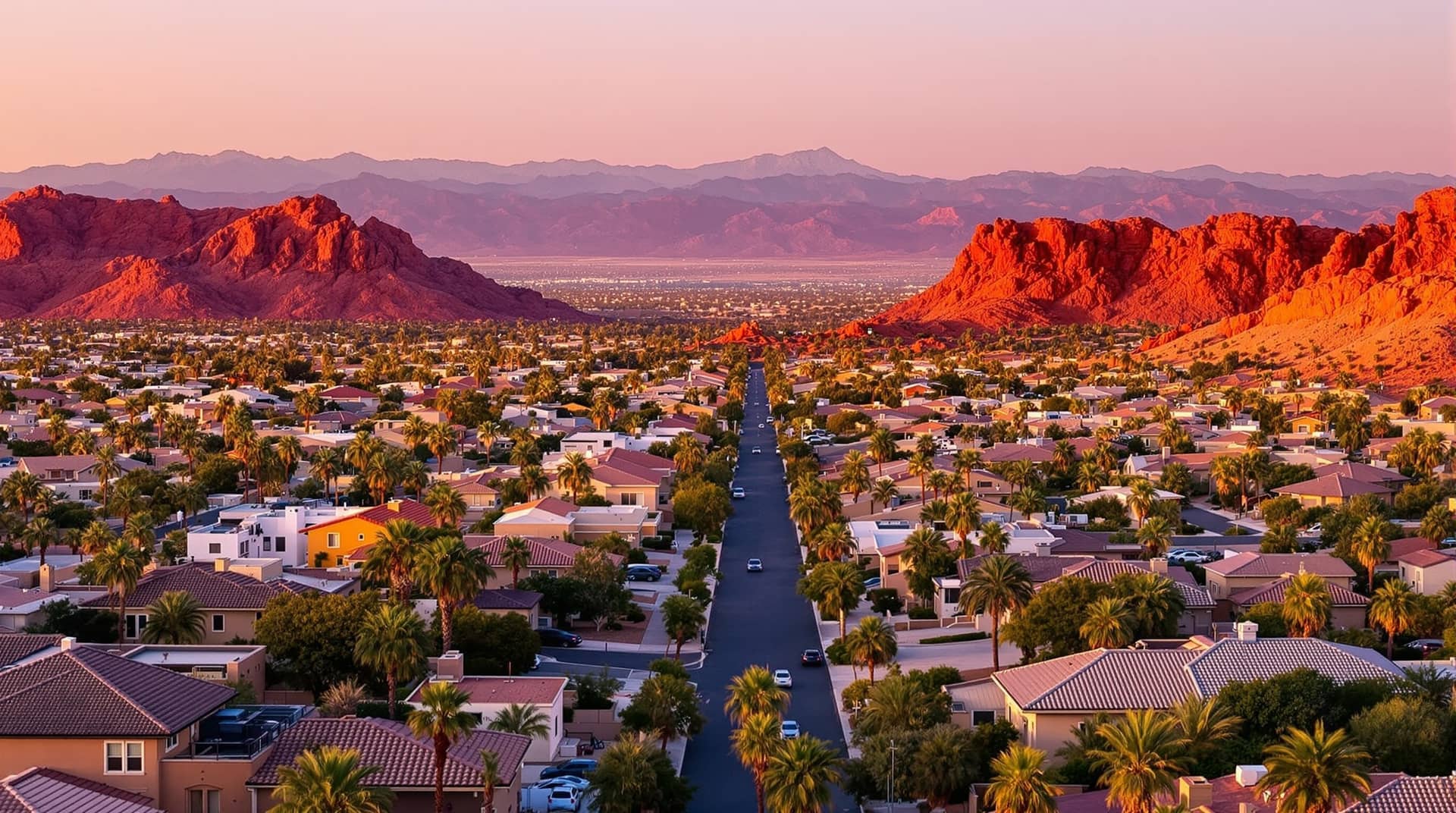
Green landscape. Las Vegas is beautiful in its own way. Red Rock Canyon is dramatic. The mountain views from Summerlin are striking. But there is no grass under your feet when you walk to the mailbox. There are no mature elm or oak trees lining the streets. There is no smell of rain on warm pavement (the occasional Las Vegas summer storm provides a brief version of this, but it is infrequent). The landscape is rock, gravel, desert plants, and concrete. Some people adapt within months. Others carry a low-grade longing for green throughout their time in Las Vegas.
Water. Not just rain, but the presence of water as a landscape feature. Lakes, rivers, ponds, fountains (Las Vegas has the Bellagio fountains, but that is tourism, not nature), and the simple humidity that makes the air feel alive. The desert air in Las Vegas is very dry; 5 to 15% relative humidity in summer. If you have any tendency toward dry skin, dry sinuses, or dry eyes, budget for humidifiers and expect an adjustment period.
Community density. This one surprises people the most. Midwestern cities, including large ones like Chicago, have a cultural infrastructure of neighborhood identity, long-term residents who know each other, local institutions (the parish church, the neighborhood hardware store, the rec league that has had the same teams for 20 years), and a sense of community that is built on geographic stability. Las Vegas has a high population turnover. People come and go. It can be harder to build the kind of deep, layered friendships that Midwesterners often take for granted. Las Vegas is not unfriendly. But the social fabric feels different, less rooted, and this affects how long it takes to feel genuinely at home.
Thunderstorms. The Midwest has dramatic, satisfying thunderstorms. The kind with green skies before the storm, the pressure drop you feel in your ears, the smell of petrichor, lightning that lights up the whole horizon. Las Vegas gets occasional intense storms, but the monsoon influence is weak compared to the Southwest (Arizona has a much more defined monsoon season). If you have a sentimental relationship with Midwest thunderstorms, you will miss them.
What Midwest Transplants Gain: The Other Side of the Ledger
No winter. This is not a small thing. Midwesterners spend real time and money on winter. Snow tires. Heating bills. Shoveling. Salt damage on cars. The psychological weight of grey skies from November through March. Travel disruption. Cancelled outdoor plans for months at a time. Las Vegas eliminates all of this. You will not own a snow shovel. You will not sit in your car for 10 minutes while it warms up. You will not cancel a weekend plan because of a blizzard.
Year-round outdoor recreation. From October through May, Las Vegas allows outdoor exercise, hiking, and recreation that Midwesterners can only dream about in February. Red Rock Canyon in January. A morning run in December. Outdoor weekend farmers markets in November. The ability to be outside in daylight hours during every month except the peak summer stretch is a genuine quality-of-life upgrade for people who value outdoor activity.
No state income tax. Covered above in the financial section, but worth restating as a lifestyle benefit. The money returned to your household budget each year from eliminating Illinois, Ohio, Wisconsin, or Minnesota state income tax is real money that you can direct toward other priorities.
Lower home carrying costs. For Chicago transplants in particular, the combination of lower property taxes and lower homeowners insurance (no tornado risk, no flood risk in most areas, no hail damage) reduces the total annual cost of homeownership even when purchase prices are comparable.
Food and entertainment access. Las Vegas is a world-class food and entertainment city, and residents have access to it at non-tourist prices. Local restaurant week deals, midweek entertainment specials, and the simple density of restaurant quality per square mile make Las Vegas a genuinely exceptional place to live if you value dining and entertainment. This is one area where Las Vegas clearly outpaces Chicago, which is itself an excellent food city, in terms of raw variety and top-end options.
The Community Question: Can You Build a Life Here?
This is the honest, uncomfortable question that most relocation guides avoid.
Las Vegas has a more transient population than any other major American city. Approximately 42 million tourists visit per year, but that is not the issue. The issue is that the resident population itself turns over at a higher rate than most cities. People come for a job, a fresh start, a specific opportunity, and they leave when circumstances change. This creates a social environment that is genuinely welcoming (Las Vegas people are accustomed to newcomers and are not insular in the way some cities are), but the friendships that form can be shallower and more temporary.
For Midwesterners who are used to communities where people have known each other for decades, and where social trust is built on shared history and geographic stability, this can feel isolating in a way that is hard to articulate. You meet people easily. You get invited to things. But the sense of deep community, the kind where someone shows up with food when you are sick or drives you to the airport because you have been neighbors for 15 years, takes longer to find and build.
It is not impossible. There are long-term Las Vegas residents who have built exactly those kinds of communities. Churches, youth sports leagues, HOA communities, and long-established local institutions provide the infrastructure for it. But it requires deliberate effort in a way that Midwesterners, who often absorb community more passively through geographic proximity and shared institutions, may not be accustomed to.
The adjustment is real. Plan for it. Join things early. Be patient with the process.
Practical Preparation for Midwest Transplants
Ship your winter gear, do not trash it. Las Vegas winters are mild, but November through February nights get cold, with overnight lows occasionally in the high 20s. You still want a real coat, real boots for the one or two winter days, and layers. You will not need it in Chicago quantities, but you will need some of it.
Budget for your first summer electric bill before it arrives. Nothing in Midwest experience prepares you for a $400 electric bill in July. Set up your NV Energy account on budget billing if you want to smooth the payments across the year. Put $250 per month aside starting from your first month of residency so the first summer does not feel like a financial shock.
Get your Nevada driver's license and vehicle registration handled in the first 30 to 60 days. Nevada requires a license transfer within 30 days of establishing residency and vehicle registration within 60 days. Clark County requires a smog check ($25 to $50) as part of registration. Budget a half-day for each.
Research neighborhoods before you pick based on price. The Las Vegas valley has a wide range of neighborhood character at similar price points. Henderson (particularly Green Valley) and Summerlin offer the best combination of schools, community infrastructure, and neighborhood stability. For families with school-age children, neighborhood selection determines your CCSD school zone, and the quality range is significant.
Join something immediately. A church, a hiking club, a youth sports league, a HOA committee, a gym. The social infrastructure in Las Vegas requires active participation more than it does in tight-knit Midwest communities. The people who build satisfying lives here are the people who did not wait to be integrated; they integrated themselves.
More from Real702
- Cost of Living in Las Vegas 2026: Real Numbers
- Best Neighborhoods for Families in Las Vegas
- Nevada Driver's License Guide for New Residents
- Setting Up Utilities in Las Vegas
- Las Vegas Moving Checklist
- Renting vs. Buying in Las Vegas 2026
FAQ
Is moving from the Midwest to Las Vegas worth it financially?
For most households, yes, but it depends heavily on where in the Midwest you are coming from. Chicago transplants gain significantly: Illinois's 4.95% income tax eliminated, property taxes cut from 1.8% to 2.3% down to roughly 0.60%, and winter utility bills replaced by summer ones that often net out favorably. Ohio, Michigan, and Indiana transplants gain on income tax but may see housing costs increase since home prices in those markets are often well below Las Vegas. Run your specific numbers before assuming the move is financially obvious.
How bad is the culture shock moving from the Midwest to Las Vegas?
It is real, and it is more subtle than people expect. The absence of seasons, the desert landscape, the high population turnover, and the lack of the tight community infrastructure many Midwesterners take for granted all register as genuine adjustments. Most people describe the first year as exciting but disorienting, the second year as settling, and the third year as home. People who struggle most are those who expected Las Vegas to feel like a warmer version of their Midwest city. It does not. It is its own thing.
What should I know about Las Vegas summers before I move?
Las Vegas summer is not like anywhere else in the continental United States except perhaps Phoenix. From June through September, daytime highs exceed 105°F consistently and reach 112 to 117°F at peaks. You reorganize your daily schedule around the heat. Outdoor activity happens before 8 AM or after 7 PM. Your electric bill for air conditioning runs $300 to $500 per month. Cars become dangerous in minutes if left in the sun. The adjustment takes one full summer. After that, you have the hang of it, and October through April genuinely rewards you for enduring it.
Is Las Vegas a good city for families from the Midwest?
Yes, with caveats. The family-friendly neighborhoods in Henderson and Summerlin are excellent, with good schools (by Nevada standards), community amenities, parks, and a suburban character that feels familiar to Midwesterners. CCSD schools are the important caveat: the district is the fifth-largest in the country and has significant quality variation by school zone. Research which school your address zones for before you sign a lease or a purchase agreement. The magnet school system provides strong alternatives but requires applications and has competitive spots.
Do Midwest transplants ever move back?
Some do, particularly those who underestimated the community adjustment and never built a solid social foundation in Las Vegas. The people who stay long-term consistently cite: joining organized activities early, finding neighbors with similar values, and giving the city at least three years before making a final judgment. The financial benefits are substantial enough that people who leave often cite social or lifestyle reasons rather than financial ones. If you invest in building community deliberately and give yourself two full summers to calibrate, the majority of Midwest transplants find that Las Vegas becomes home.
Keep reading
- Moving from Arizona to Las Vegas: What Actually Changes in 2026An honest comparison of Phoenix vs Las Vegas: taxes, cost of living, jobs, schools, and what Arizona transplants are surprised to find.
- Moving from Texas to Las Vegas: Honest Comparison for 2026Taxes, housing, weather, and job market compared. What Texas transplants actually experience when moving to Las Vegas in 2026.
- Las Vegas Speed Traps: A Local's Guide to Not Getting a Ticket (July 2026)The Las Vegas roads where cops camp and speed limits drop without warning. Cactus Ave, Durango, the 215, and more, straight from residents who drive them daily.
- Best Moving Companies in Las Vegas 2026: Avoid Scams, Hire RightHow to tell a legitimate Las Vegas mover from a broker scam in 2026. The hostage load trick, summer heat logistics, and what real reviews actually tell you.